Decomposition
Break a complex problem into smaller parts you can understand, solve and test individually.
Try the example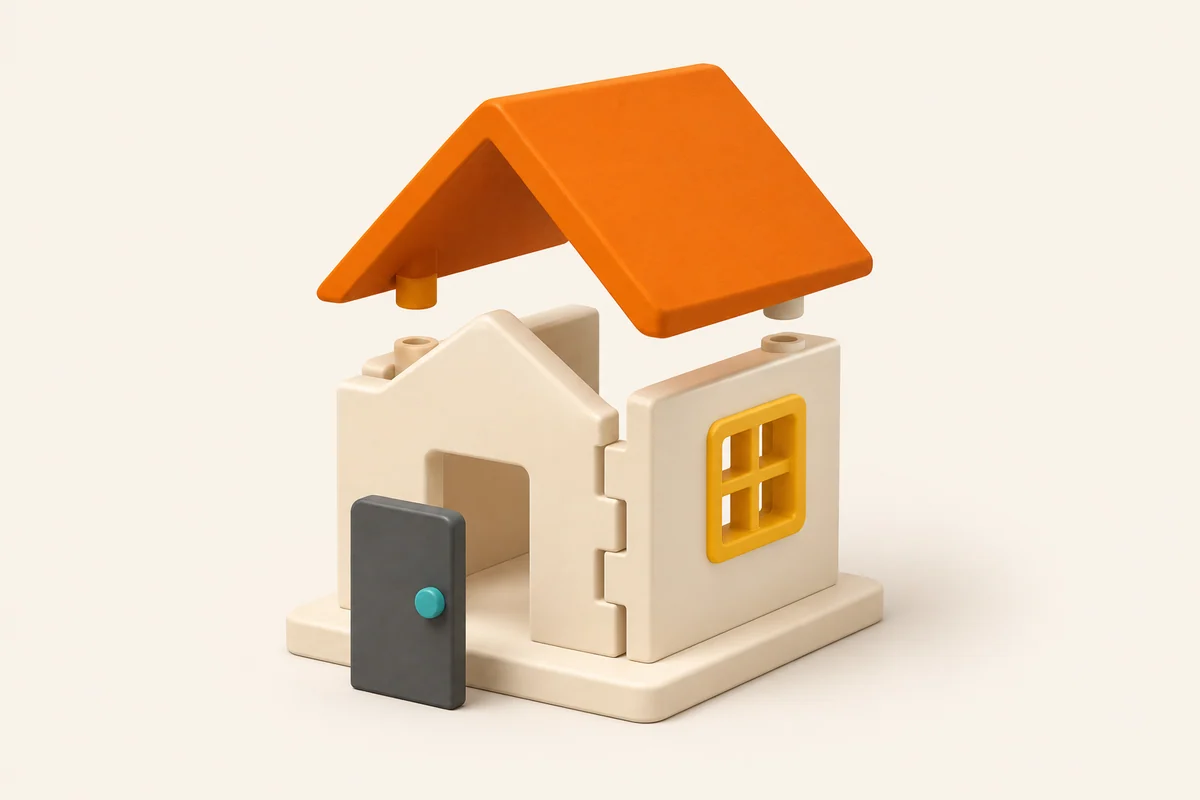
How would you build a model house?
If three people make the roof, walls and door separately, what do they need to agree on first?
Look at the whole house
Find the walls, roof and door in the outline. Each part gives you a smaller problem to solve.
How to break down a problem
Describe the result
What should the finished system do? In a video game, a player might move, earn points and advance to another level.
Give each part a job
Separate movement, enemy behaviour, scoring, sound and level design. Teammates can work on different parts at the same time.
Test the connections too
Test each part, then try them together. When the player scores, does the counter change and does the sound play?
Where you can use it
Planning a trip
Separate transport, accommodation, packing and daily activities. Your arrival time connects the transport and accommodation plans.
Cooking a meal
Give each dish its own recipe. Then coordinate cooking times so the dishes are ready to serve together.
A banking app
Checking a balance, depositing money and withdrawing money are separate jobs. A program can give each job its own function.
check_balance()
deposit_money(amount)
withdraw_money(amount)
How the skills connect
Once you can see the parts, compare them. Steps that recur in two parts may point to a solution they can share.