
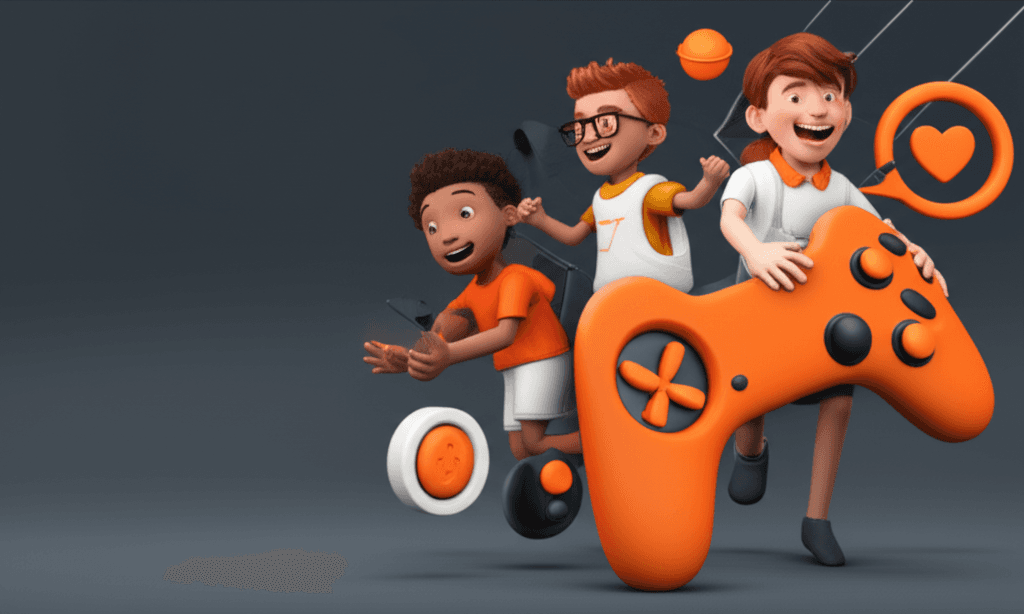
When children play games, they're deeply focused, persistent in the face of failure, and intrinsically motivated to improve. These are exactly the qualities we want in learners. Game-based learning harnesses this natural engagement for educational purposes.
The Psychology of Play
- Intrinsic Motivation: Games tap into the desire to do something for its own sake rather than external rewards.
- Safe Failure: Games create safe spaces to fail—losing a level isn't shameful, it's just part of the process.
- Flow State: Well-designed games create "flow"—a state of complete absorption where learning happens effortlessly.
Types of Game-Based Learning
- Educational Games: Designed specifically for learning (e.g., math games).
- Gamification: Adding points, badges, and leaderboards to traditional learning.
- Learning through Creation: Building games to learn programming and logic.
- Commercial Games: Using games like Minecraft for educational value.
Learning by Creating
At Codzilla, we believe the most powerful game-based learning comes from creating games, not just playing them.
When students build games:
- Programming becomes necessary: Loops and variables aren't abstract concepts; they are tools needed to make the game work.
- Design thinking develops: Students must think about the user experience.
- Creativity flourishes: They build worlds, characters, and rules.
Advice for Parents
- Look for games that require problem-solving, not just reflexes.
- Play games together and discuss strategies.
- Encourage game creation alongside playing.
- Balance game time with other activities.
Our game development courses progress from simple Scratch games to complex projects. Students don't just learn to code—they become game designers.
Share this article