

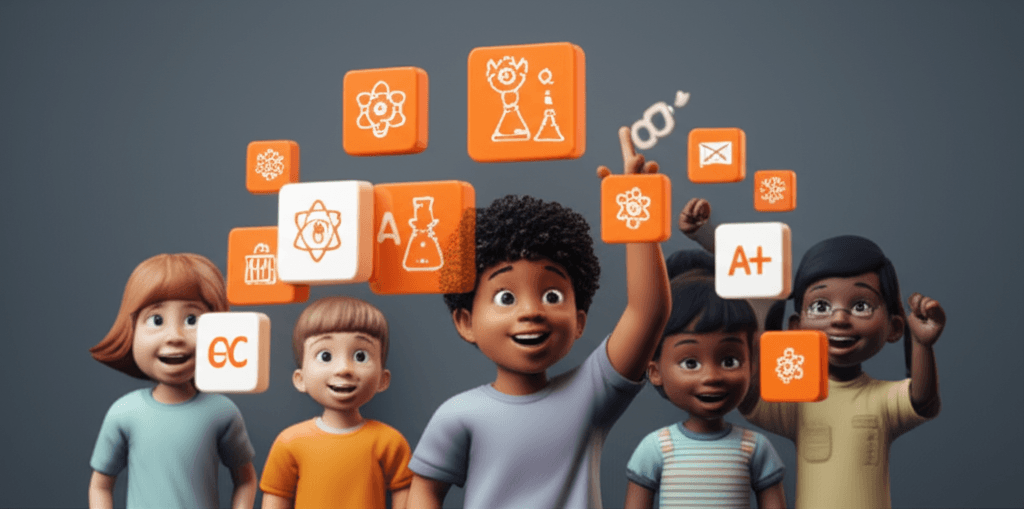
STEM—Science, Technology, Engineering, and Mathematics—has become a buzzword in education. But the emphasis on early STEM education isn't just a trend; it's backed by research on how children learn and what skills they'll need for the future.
Why Start Early?
- Brain Development: Early childhood is a period of rapid brain development. The connections formed during these years create foundations for future learning.
- Natural Curiosity: Young children are naturally curious scientists—they experiment, observe, and ask endless questions. STEM education channels this curiosity.
- Breaking Stereotypes: Stereotypes about who belongs in STEM fields form early. Introducing all children to STEM early helps ensure diverse perspectives in the future.
What is Early STEM?
Early STEM education doesn't mean putting toddlers in front of computers or teaching calculus to kindergartners. Developmentally appropriate STEM is:
- Play-based: Building with blocks is engineering; water play involves physics.
- Inquiry-driven: Encouraging questions rather than delivering facts.
- Hands-on: Learning by doing.
STEM by Age
- Ages 3-4: Building play, simple nature observations, counting and sorting, cause-and-effect explorations.
- Ages 5-6: Basic coding concepts, simple experiments, pattern recognition, building challenges.
- Ages 7-8: Visual programming, structured scientific inquiry, mathematical problem-solving.
Myths vs. Reality
- Myth: "It's too early."
- Reality: Age-appropriate STEM builds thinking skills that are useful immediately.
- Myth: "My child isn't a STEM type."
- Reality: All children benefit from logical thinking and problem-solving skills.
- Myth: "It takes away from play."
- Reality: Good early STEM is play.
Codzilla's Approach
Our programs for younger children are designed with early childhood development in mind: playful approaches, small groups, age-appropriate challenges, and a focus on process over results. We believe every child deserves the opportunity to discover the wonder of STEM.
Share this article